

What Digital Sovereignty Actually Means
Most people have never been asked whether they consent to the architecture of the internet. The default is surveillance – data collected, stored, analysed, and monetised by platforms whose business model depends on knowing as much about you as possible. The default is dependency – your passwords in someone else’s vault, your authentication in someone else’s app, your access contingent on someone else’s server staying online.
Digital sovereignty is the decision to opt out of that default. It means your secrets are stored where only you can reach them. It means the tools you use to protect yourself can be examined, verified, and trusted – not because a company promises they are safe, but because you can read the code yourself. It means your security does not depend on a platform’s goodwill, a provider’s uptime, or a government’s restraint.
It is not paranoia. It is ownership.
Why It Matters More Than Ever
Your Data Is Someone Else’s Business Model
Every major platform that stores your data does so because your data has value to someone. The password manager that syncs across your devices, the authenticator app on your phone, the cloud storage that holds your files – these are not neutral tools. They are businesses with investors, legal departments, and an obligation to cooperate with authorities when compelled. Your data lives on their infrastructure, subject to their terms of service, their security practices, and the laws of their jurisdiction.
The Cloud Is Someone Else’s Computer
“The cloud” is a convenient abstraction for a simple fact: your data is stored on computers owned by someone else, in data centres located somewhere, operated by staff you have never met, and subject to legal processes you are not informed about. When a cloud service is breached – and they are, regularly – your data is exposed. When a cloud service is subpoenaed – and they are, routinely – your data is handed over. When a cloud service goes offline – and they do, occasionally – your access disappears.
This is not a criticism of any company. It is a structural reality of any system where your data lives on someone else’s hardware.
Self-custody removes this dependency entirely. Your data on your device. No cloud in the middle.
Open-Source Is the Only Proof That Works
Every security product makes promises. Most of them cannot be verified. A closed-source password manager tells you your vault is encrypted – but you cannot read the code that implements that encryption, cannot check for backdoors, cannot verify that the master password is handled the way they claim. You trust the promise, not the proof.
Open-source changes this fundamentally. When the complete source code is published, the security community can read it, audit it, find problems, and report them. Bugs get fixed publicly. Improvements get contributed. The security model is not protected by secrecy – it is strengthened by scrutiny.

Jurisdiction Is Not an Abstract Concern
Where a company is incorporated matters. A company subject to US law can be compelled by US authorities to hand over data – including data belonging to users who have never been to the United States. Laws like the CLOUD Act make this possible regardless of where the data is physically stored.
Seedkeeper is incorporated in Belgium, personalized in Belgium, and subject to European law. More importantly – because Seedkeeper operates on a pure self-custody model with zero cloud dependency – there is no data held by the company to hand over.
Seedkeeper’s firmware and companion app are published in full. Anyone can verify exactly what happens to their data. That is not a feature. It is the foundation.
Your secrets exist only on the device in your possession. No jurisdiction can compel access to data that does not exist on any server.
What Self-Custody Looks Like in Practice
Your Secrets Never Leave Your Device
Every password, passkey, seed phrase, and secure note stored in Seedkeeper lives inside the device’s EAL6+ certified secure element – a dedicated chip designed specifically to resist extraction, even with physical access to the hardware. Nothing is synced to a cloud. Nothing is transmitted to a server. Nothing leaves the device unencrypted. Ever. Your secrets are where you put them, accessible only to you, only with your PIN.
No Account. No Login. No Trail.
Using Seedkeeper requires no account. No email address. No phone number. No profile. No registration. The app connects to your device and works – with no data exchanged with any server, no usage tracked, no analytics collected. There is no profile of you in any database, because no database was ever created. You are not a user to be managed. You are a person using a tool.
Code You Can Read. Security You Can Verify.
Seedkeeper’s complete source code – firmware, applet, and companion app – is published on GitHub. Every line of code that touches your data is publicly readable. Security researchers have audited it. Developers have contributed to it. Anyone who wants to verify what Seedkeeper does with their secrets can do so, without trusting our word, without signing an NDA, without waiting for a third-party audit report.
Built in Europe. Governed by European Law.
Seedkeeper is designed, developed, and personalized in Belgium. The company behind it – Satochip – is a Belgian registered entity, subject to European law and GDPR by default. The hardware is assembled by a trusted manufacturing partner and uses NXP secure elements – then code-loaded and personalized entirely in-house in Belgium, where the device’s actual security identity is established.
Seedkeeper and the Cypherpunk Tradition
The cypherpunk movement – which gave the world public key cryptography, PGP, BitTorrent, Bitcoin, and Tor – was built on a single conviction: that privacy is not a privilege to be granted by institutions, but a right to be protected by mathematics and open tools.
“Privacy for the weak, transparency for the powerful” was the principle. Tools that anyone could use, that no authority could disable, that worked by proof rather than promise.
Seedkeeper is not a cypherpunk product in the narrow technical sense. But it is built on cypherpunk values: self-custody over dependency, open-source over trust-me, hardware over cloud, individual control over institutional permission.
The belief that your digital life – your passwords, your passkeys, your recovery phrases, your secrets – should be yours to protect, with tools you can verify, on hardware you can hold.
That is what digital sovereignty means. And it fits in your pocket.

Available on Seedkeeper PRO
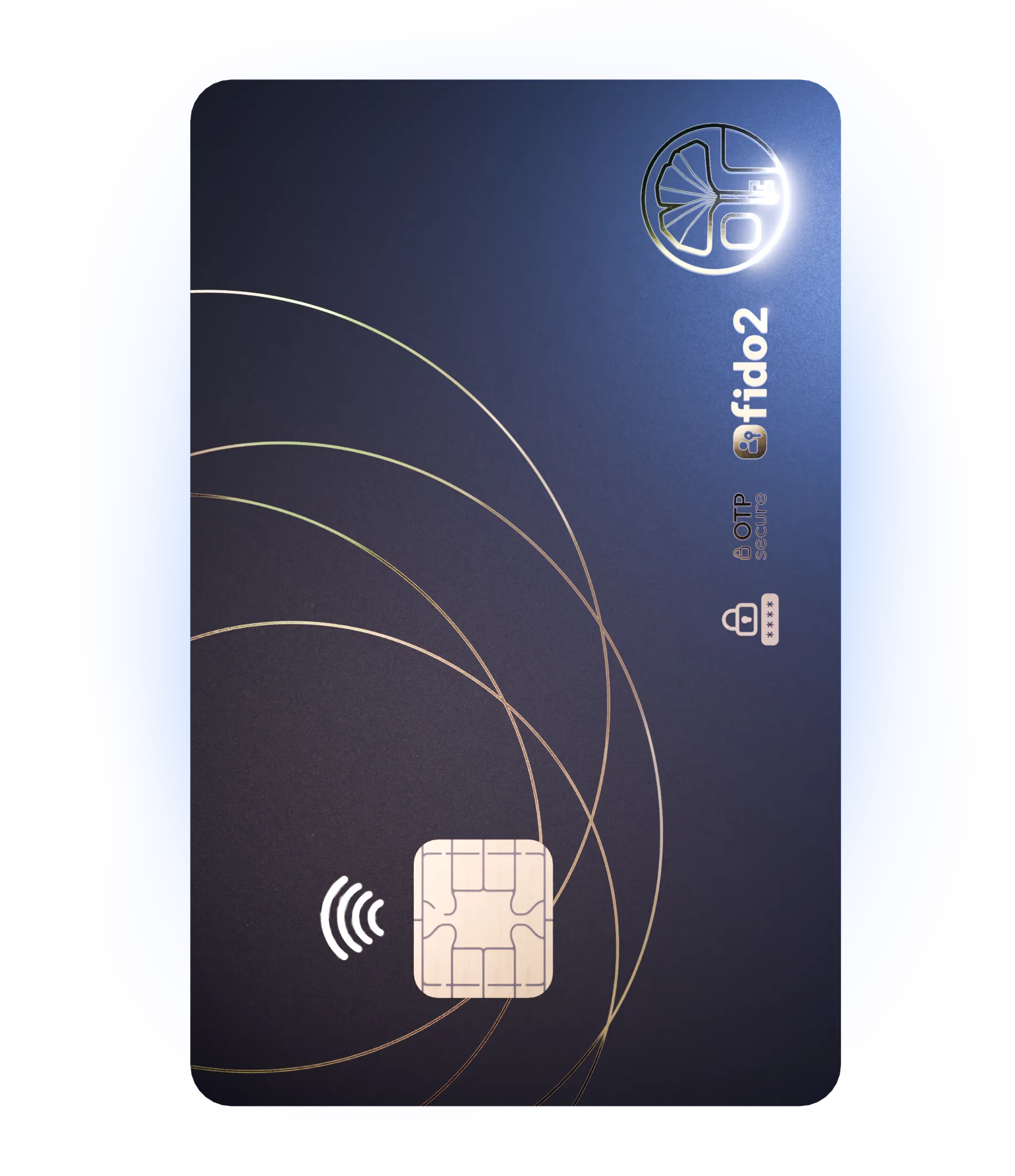

Looking for password management without passkeys? Seedkeeper Classic starts at €25.
